




Vietnam launches dual city International Financial Centre in bold bid to draw global capital


Vietnam has officially put into operation its long-anticipated International Financial Centre (IFC), a large scale, dual city project that authorities see as a cornerstone of the country’s next phase of economic reform and global integration.
The Vietnam International Financial Centre (VIFC) covers roughly 1,200 hectares, split between Ho Chi Minh City, Vietnam’s commercial hub, and Da Nang, a fast developing coastal city located about 925 kilometres away. The initiative represents one of the most far reaching institutional reforms since Vietnam began its market oriented transformation nearly four decades ago.
In December, the government approved eight implementing decrees alongside a standalone law governing the operation of the VIFC. Together, these instruments establish an extensive legal and policy framework covering taxation, land use, residency, governance and dispute resolution. Notably, the framework opens the door to Common Law inspired mechanisms, English language proceedings and the participation of foreign judges in a specialised court.
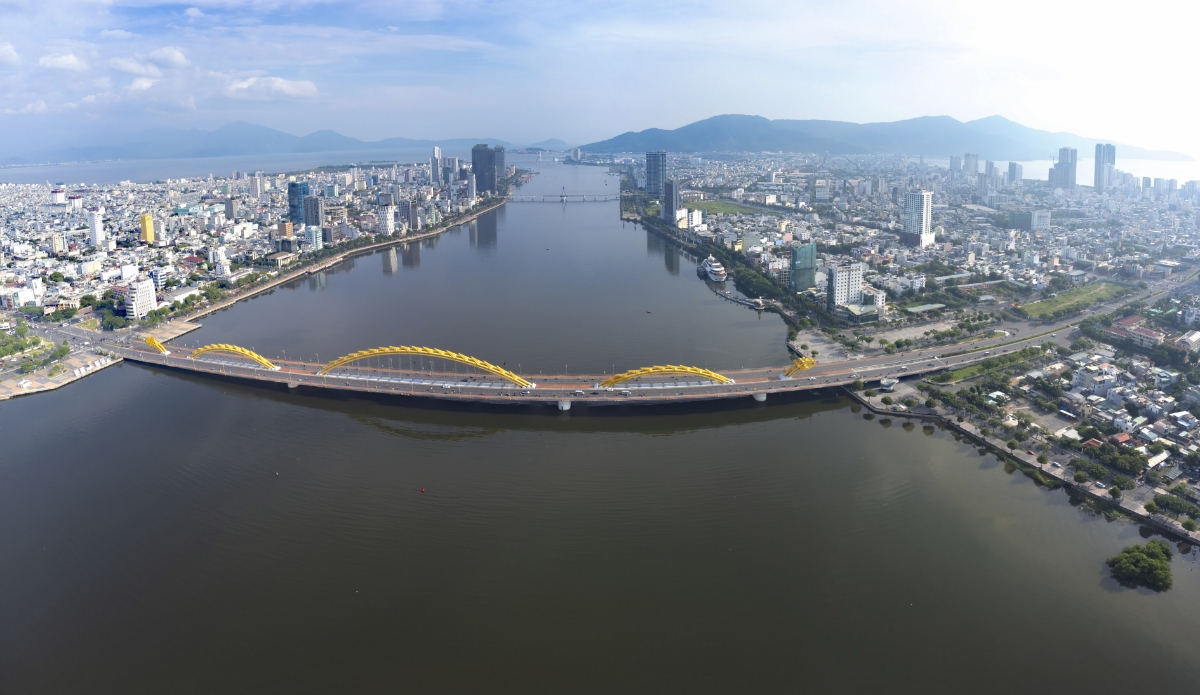
A governing council for the VIFC has also been formed, chaired by Permanent Deputy Prime Minister Nguyen Hoa Binh, with separate executive authorities established in Ho Chi Minh City and Da Nang to manage local operations.
According to Do Cong Nguyen, Vietnam country manager at French-headquartered consultancy Altios, the launch of the financial centre signals a significant shift in state thinking. He said the move reflects a transition toward a governance model focused on facilitation and service provision, aimed squarely at attracting international capital flows.
Two locations, distinct roles
Under Vietnam’s two city approach, the VIFC is designed to combine scale with experimentation.
In Ho Chi Minh City, the centre occupies a contiguous zone of nearly 900 hectares, reinforcing the city’s role as the country’s primary base for capital markets, corporate finance and asset management. The executive authority there will be chaired by Truong Minh Huy Vu, director of the Ho Chi Minh City Institute for Development Studies.
Da Nang, by contrast, will host a more decentralised centre spread across several sites totalling about 300 hectares. It is positioned as a testing ground for emerging financial models, including fintech, digital assets, trade finance, innovative credit products and specialised exchanges. Oversight of the Da Nang IFC will be led by Ho Ky Minh, permanent vice-chairman of the city’s People’s Committee.
Initial investor interest is already taking shape. Ho Chi Minh City has shortlisted several potential partners for the first phase of development, including Nasdaq, VinaCapital, MB Bank, Vietcombank, Binance, TikTok and Viettel. Da Nang has announced its first group of ten participating entities, among them Makara Capital Vietnam Holdings, Bybit Technology Vietnam and Verichains Solutions.
A legal signal aimed at trust
At the centre of the reform package is a new law establishing a specialised court for the VIFC. Passed by the National Assembly on December 11, the law will come into effect on January 1, 2026.
The legislation allows qualified foreign judges to hear cases within the centre, provided they meet requirements such as English fluency and at least 10 years of experience in investment or commercial disputes. Depending on the nature of a transaction, courts may apply Vietnamese law, foreign law or internationally recognised commercial practices, as long as decisions do not contravene Vietnam’s public order.
Nguyen of Altios described the introduction of Common Law elements and foreign judges as a strong credibility signal. He said these changes are likely to reassure international investors accustomed to familiar legal standards.
The reform is also expected to reshape Vietnam’s legal profession. Tran Dinh Minh Long, a lawyer at Hanoi, based firm Vi Dan, noted that English proficiency and Common Law knowledge will become increasingly essential for lawyers seeking to operate effectively within the new financial ecosystem.
Long term incentives
The decrees governing the VIFC, which took effect on December 18, spell out the incentives first approved by parliament earlier this year.
A round the clock online registration system will be introduced, with IFC membership certificates required to be issued within five working days. New projects in priority sectors may qualify for a 10 per cent corporate income tax rate for up to 30 years, along with tax holidays of up to four years and a 50 per cent reduction for as long as nine subsequent years.
Personal income tax exemptions will apply until the end of 2030 for managers, specialists and highly skilled professionals working at the centre. Capital gains from transfers of shares or capital contributions in VIFC member entities will also be exempt from personal income tax through 2030.
To attract foreign professionals, Vietnam is offering long term visas of up to 10 years for experts and their families, alongside fast track processing of work permits within three days. The decrees further set out rules for land use, commodity exchanges, arbitration services and fundraising by VIFC, certified startups through crowdfunding or private placements.
Structural challenges remain
Despite the extensive reforms, analysts caution that Vietnam’s wider financial system remains underdeveloped. Capital markets are relatively shallow, financial instruments are limited, and liquidity remains constrained.
Vietnam’s sovereign credit rating is still below investment grade, restricting borrowing capacity for domestic firms. Its stock market continues to be classified as a frontier market by MSCI.
Eric Truong, chairman of the Vietnam Investment Council and founder of Robinhood Capital, said the country lacks investment banks and institutional investors capable of underwriting large scale transactions for foreign capital. He added that Vietnam’s investor base remains heavily reliant on banks and retail investors, with relatively few pension, insurance or private equity funds providing long term capital.
While the incentives offered by the VIFC are expected to draw new participants, experts agree that implementation will be decisive.
“Ambition puts Vietnam on the radar,” Nguyen of Altios said. “What matters now is execution. How effectively the gap between policy design and real world practice is closed will determine whether the country can truly establish itself as an international financial hub.”
Hoàng Duy
Hội nghị Gặp gỡ các tổ chức PCPNN 2026: Kết nối nguồn lực phục vụ phát triển
Thị trường thêm lực đẩy mới, doanh nghiệp phải đổi cách “chạy”
Từ “tinh thần nhân đạo” và “sức mạnh hợp tác” đến sinh kế bền vững
HTX Vân Hồ Retreat: Tạo sinh kế, mở cơ hội việc làm cho lao động trẻ vùng cao
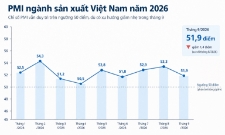
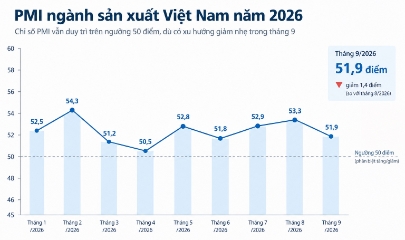
PMI tháng 9 giảm còn 51,9 điểm
Xuất khẩu vào thị trường khó: Doanh nghiệp phải ‘khóa’ rủi ro từ sớm
Ngân sách sẽ chi tiền kiểm toán, lương nhân lực và giải pháp chuyển đổi số cho hợp tác xã






Cùng chuyên mục
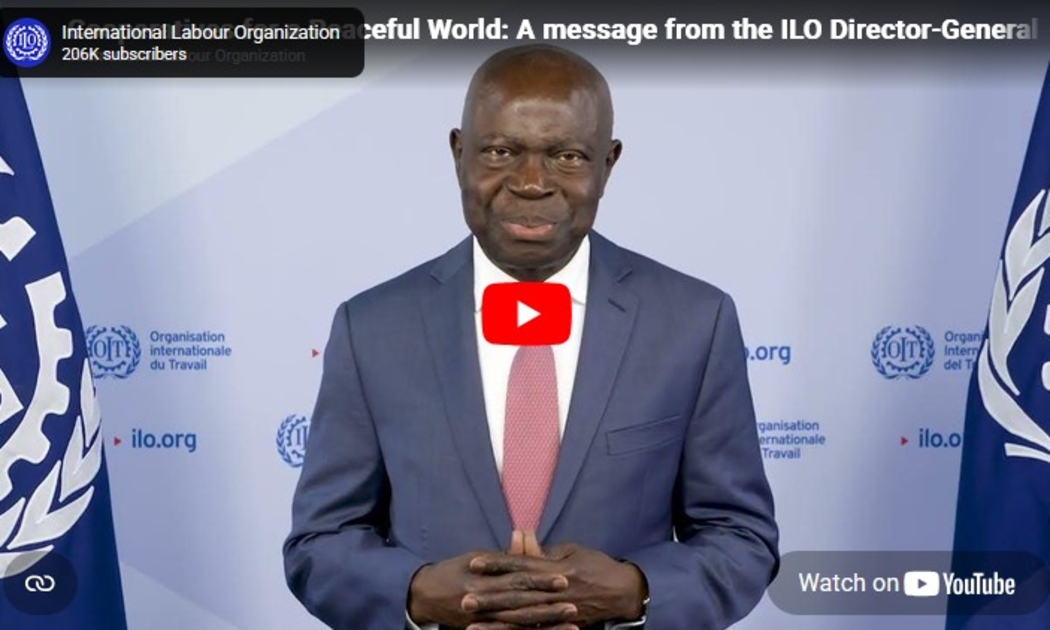
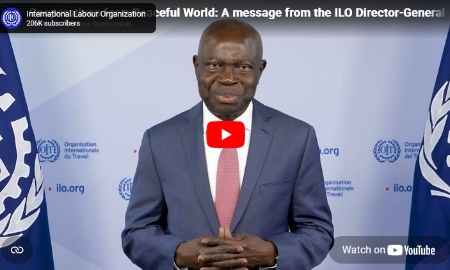
Cooperatives for a Peaceful World: A message from the ILO Director-General
In his message marking the International Day of Cooperatives 2026, ILO Director-General Gilbert F. Houngbo highlights the vital role of cooperatives in advancing peace through decent work, social justice and resilient communities.

Empowering women: A lever for sustainable growth of agricultural cooperatives
Women are no longer only contributing labor in the fields but are increasingly taking part in management, operations, and market development for agricultural cooperatives. According to experts, expanding women’s access to capital, technology, and decision-making power will be key to enhancing the competitiveness of the cooperative economy.

VCA promotes credit cooperative partnership with Thailand
The Vietnam Cooperative Alliance (VCA) is expanding international cooperation in a more substantive direction, focusing on connecting financial value chains, with Thailand’s credit cooperative model seen as a promising avenue.

Vietnam’s cooperatives enter a pivotal year: Honoring, connecting and accelerating growth
On April 6, 2026, the Vietnam Cooperative Alliance announced its key activities for the year, while also releasing the results of the CoopStar Awards and the Mai An Tiem Awards.
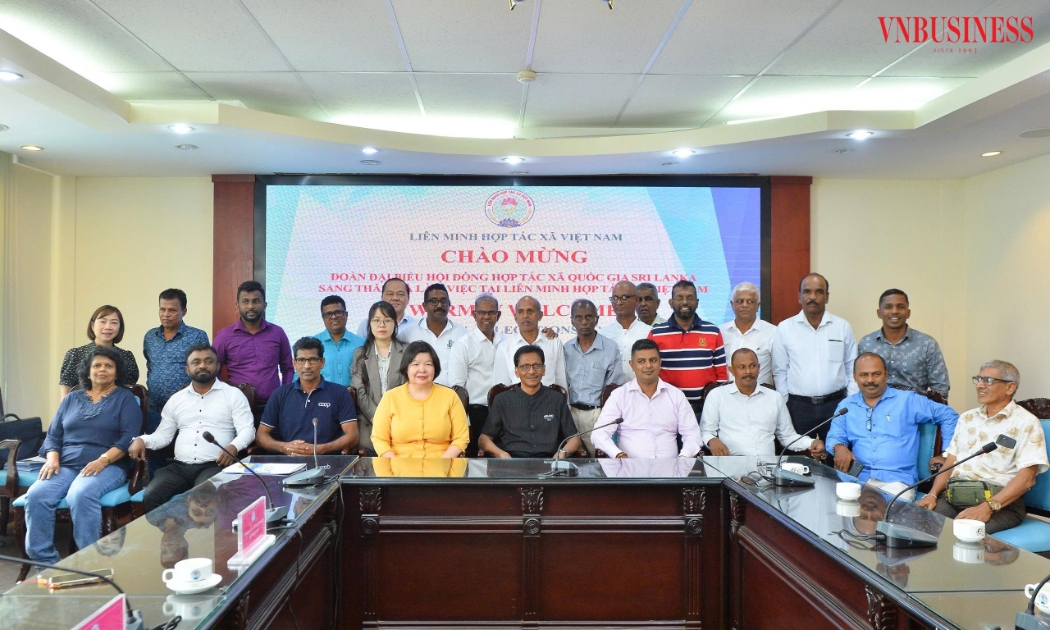
Expanding markets for cooperatives, VCA strengthens ties with Sri Lanka
VCA is expanding practical global cooperation in value chains, finance, and markets, with Sri Lanka emerging as a key partner in South Asia.
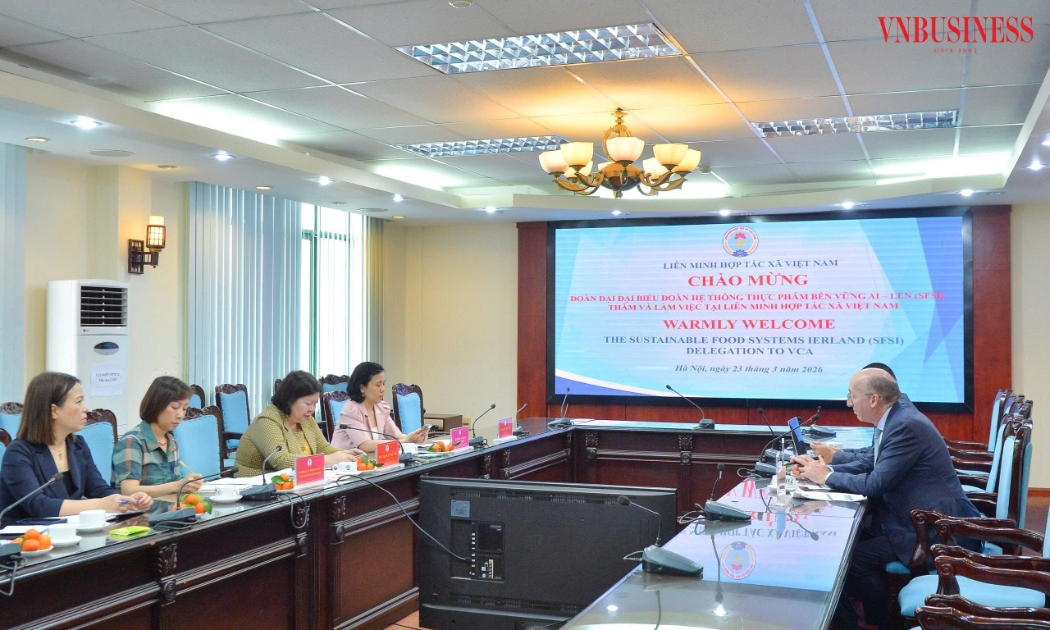
VCA partners with SFSI to promote digital transformation in cooperatives
On the morning of March 23, Chairwoman of the Vietnam Cooperative Alliance (VCA) Cao Xuan Thu Van held a working session with David Butler, Director of the Sustainable Food Systems Ireland (SFSI).





 Infographic
Kết quả sắp xếp, tinh gọn bộ máy và đơn vị sự nghiệp qua những con số
Bộ Nội vụ cho biết, sau khi thực hiện sắp xếp, số lượng thôn, tổ dân phố cả nước đã giảm từ 89.589 xuống còn 48.078 đơn vị (giảm 41.511 đơn vị).


Đừng bỏ lỡ






 Từ ruộng đến thị trường: HTX số hoá đơn hàng như thế nào?
Đằng sau những đơn hàng rau củ là cả chuỗi dữ liệu về vùng nguyên liệu, sản lượng, thu hoạch, chất lượng và giao hàng. Tại HTX Vườn Nhà Đà Lạt, chuyển đổi số đang giúp những dữ liệu ấy được kết nối, từ đó tổ chức sản xuất và đưa nông sản đến thị...