



Expanding markets for cooperatives, VCA strengthens ties with Sri Lanka


VCA is expanding practical global cooperation in value chains, finance, and markets, with Sri Lanka emerging as a key partner in South Asia.

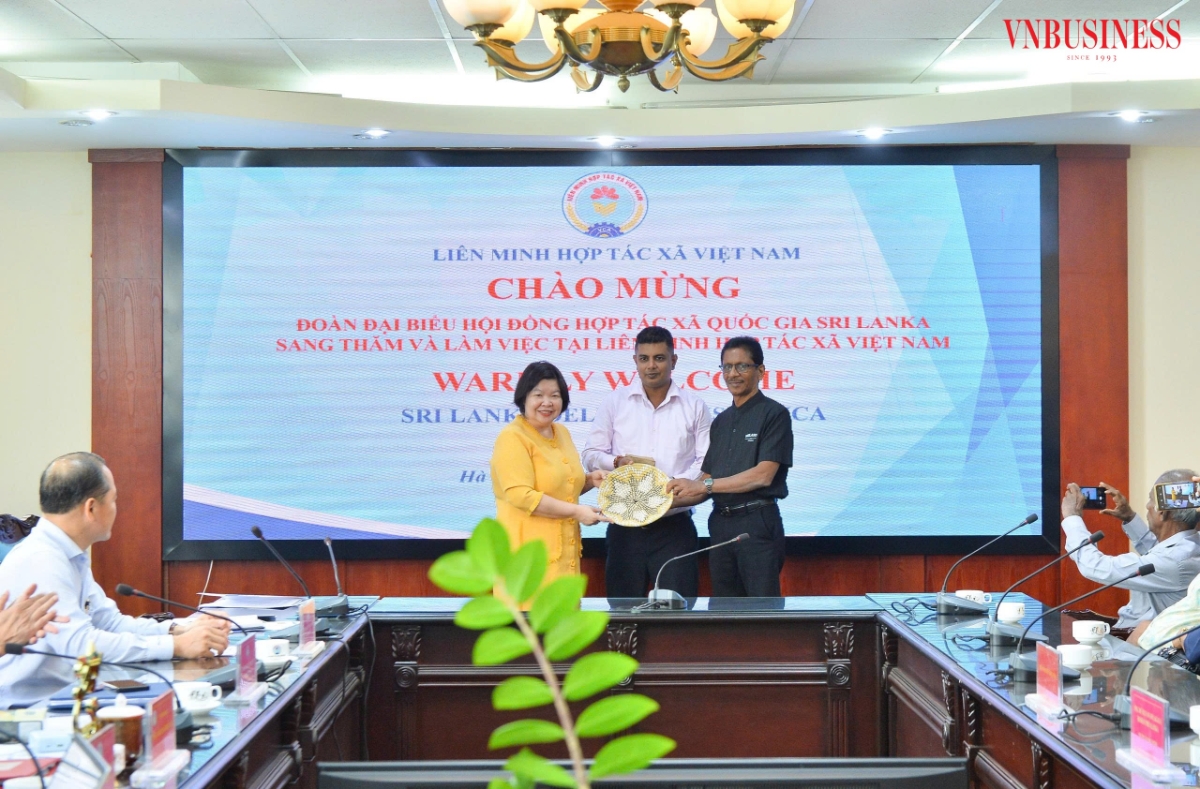
On April 2, Chairwoman of VCA Cao Xuan Thu Van held a working session with a delegation from the National Cooperative Council of Sri Lanka, during which both sides agreed to enhance cooperation in developing the cooperative sector in the two countries.
VCA expands international cooperation
At the meeting, Chairwoman of VCA noted that VCA is an active member of the International Cooperative Alliance (ICA) and has established strategic partnerships with 125 organizations worldwide. This serves as a key foundation for expanding international cooperation, with Sri Lanka identified as a high-potential partner.

As of the end of Q1 2026, in addition to cooperatives, the system includes 1,177 people’s credit funds, which play a vital role in providing financial resources for the collective economy.
The VCA system is organized in a synchronized structure from the central to local levels, comprising specialized departments, training institutions, and the Cooperative Development Support Fund. At the local level, there are 34 provincial and municipal cooperative alliances along with corresponding support funds.
Alongside strengthening its domestic system, VCA has been actively implementing various international cooperation programs to enhance the capacity of the cooperative sector. Notable initiatives include the YOUCOOL project with the European Union, aimed at improving digital capacity for youth in cooperatives; collaboration with The Asia Foundation (TAF) to promote financial inclusion in the digital economy; and partnerships with SFSI (Ireland) and DGRV (Germany) to foster innovation ecosystems and sustainable cooperative development.
In terms of strategic direction, VCA has identified two key pillars for the coming period. The first is digital and green transformation, focusing on promoting circular economy models, complying with ESG standards, and pursuing international carbon credit registration for agricultural cooperatives. At the same time, the application of technology in governance, blockchain-based traceability, and cross-border e-commerce development will be accelerated.
Expanding value chains and financial connectivity
During the meeting, the VCA Chairwoman proposed several concrete areas of cooperation with Sri Lanka, particularly in trade promotion and supply chain development.
Both sides aim to establish direct import-export links for key products such as tea, spices, and handicrafts, while jointly organizing exhibition booths at major international trade fairs. Mechanisms for complementary goods exchange were also proposed to meet the consumption and production needs of cooperative members in both countries.
In addition, cooperation in finance and knowledge exchange was highlighted as a key priority. The two sides will explore models such as cooperative hospitals and multi-purpose cooperatives in Sri Lanka, while promoting linkages between Sri Lanka’s rural cooperative banks and Vietnam’s cooperative banking and credit fund systems.
The Vietnam Cooperative Development Support Fund also proposed strengthening collaboration in governance training, improving capital utilization efficiency, and mobilizing internal resources, with the goal of enhancing financial self-reliance within the cooperative sector.
Beyond policy direction, both sides agreed to implement study tours and experience-sharing programs focusing on green governance, social welfare, and sustainable development.

Assessing Vietnam’s cooperative ecosystem, Mr. De Silva Wawlagala Roshan Priyalanka, Deputy General Director of COOPFED, expressed strong impressions of the scale and support fund system, and voiced expectations for deeper cooperation in trade exchange and supply chain development.
The meeting concluded with a strong commitment from both sides to deepen cooperation through practical programs aligned with digital and green transformation trends. This is seen as a concrete step toward improving production efficiency, ensuring social welfare, and promoting the sustainable development of the collective economy in the new phase.
Vũ Hương - Phạm Hoà



Cùng chuyên mục

Cooperatives for a Peaceful World: A message from the ILO Director-General
In his message marking the International Day of Cooperatives 2026, ILO Director-General Gilbert F. Houngbo highlights the vital role of cooperatives in advancing peace through decent work, social justice and resilient communities.

Empowering women: A lever for sustainable growth of agricultural cooperatives
Women are no longer only contributing labor in the fields but are increasingly taking part in management, operations, and market development for agricultural cooperatives. According to experts, expanding women’s access to capital, technology, and decision-making power will be key to enhancing the competitiveness of the cooperative economy.

VCA promotes credit cooperative partnership with Thailand
The Vietnam Cooperative Alliance (VCA) is expanding international cooperation in a more substantive direction, focusing on connecting financial value chains, with Thailand’s credit cooperative model seen as a promising avenue.

Vietnam’s cooperatives enter a pivotal year: Honoring, connecting and accelerating growth
On April 6, 2026, the Vietnam Cooperative Alliance announced its key activities for the year, while also releasing the results of the CoopStar Awards and the Mai An Tiem Awards.
VCA partners with SFSI to promote digital transformation in cooperatives
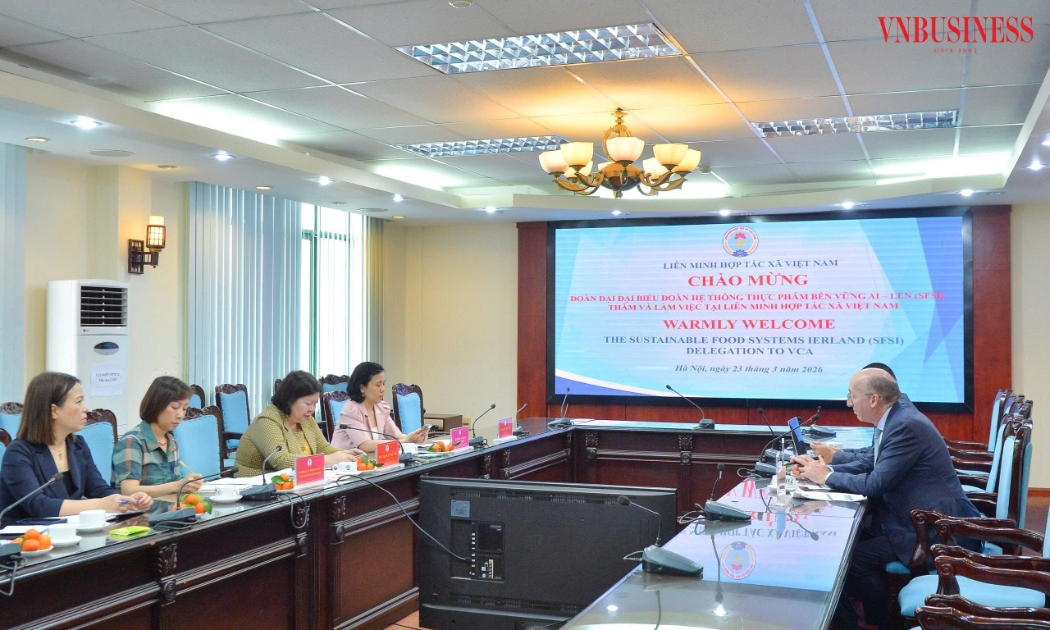
On the morning of March 23, Chairwoman of the Vietnam Cooperative Alliance (VCA) Cao Xuan Thu Van held a working session with David Butler, Director of the Sustainable Food Systems Ireland (SFSI).

Aviation in 2026: Rising supply, volatile demand, and the market share question
Vietnam’s aviation market is no longer confined to a price war. Airlines are moving toward comprehensive competition across the entire ecosystem—from air transport and airport infrastructure to logistics and ground handling services.
Đọc nhiều





 Infographic
Kết quả sắp xếp, tinh gọn bộ máy và đơn vị sự nghiệp qua những con số
Bộ Nội vụ cho biết, sau khi thực hiện sắp xếp, số lượng thôn, tổ dân phố cả nước đã giảm từ 89.589 xuống còn 48.078 đơn vị (giảm 41.511 đơn vị).


Đừng bỏ lỡ





 HTX nhỏ, chuyển đổi số lớn
Chuyển đổi số từ lâu đã không còn là câu chuyện riêng của những HTX quy mô lớn. Ở những HTX quy mô nhỏ, từ quản lý sản xuất, điều hành đến truy xuất nguồn gốc và tiêu thụ sản phẩm, những công cụ số đang giúp HTX nâng hiệu quả hoạt động và từng bước...